
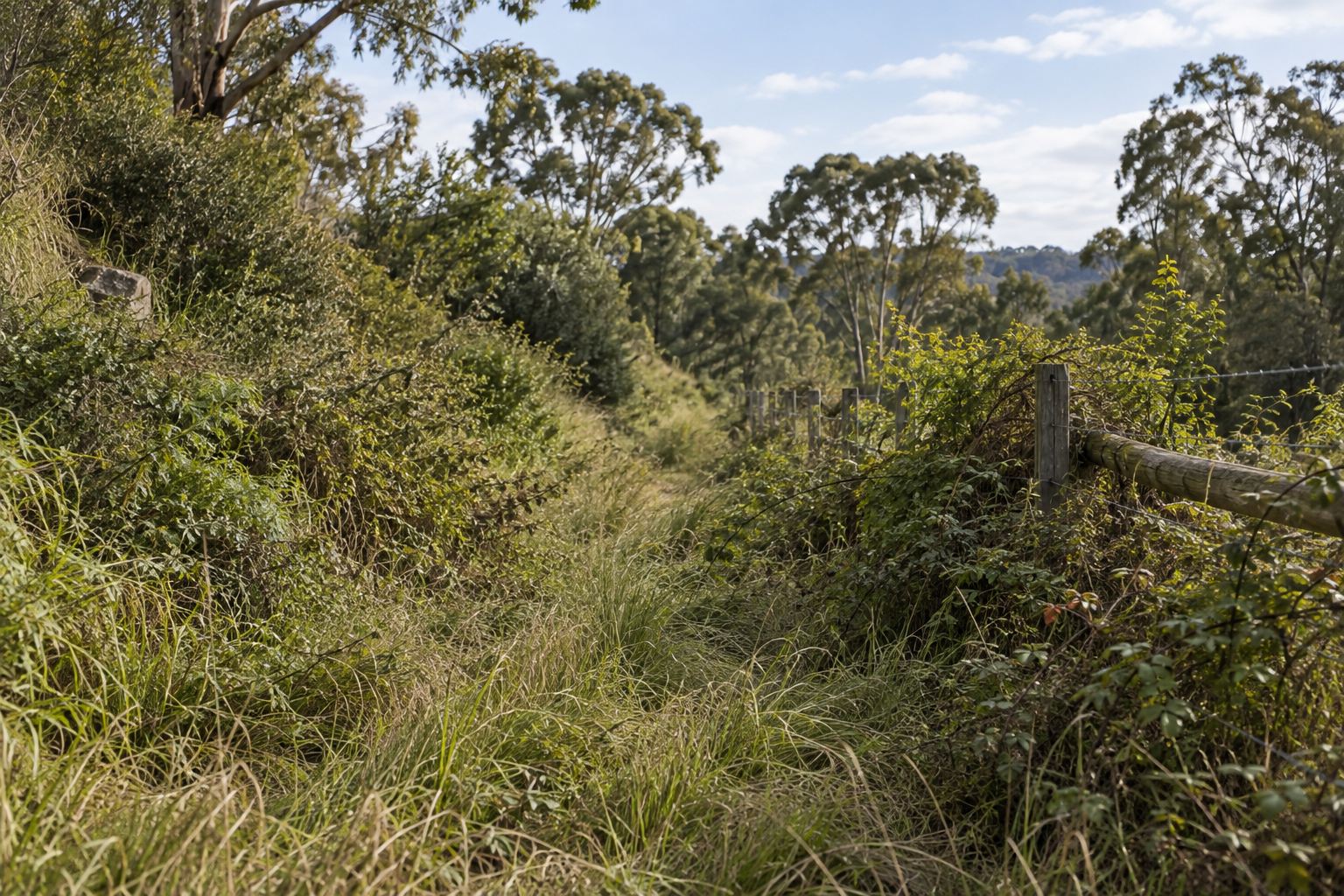
Vegetation removal near structures and drainage
Growth around fences, structures and drainage lines
Where the question is not how it looks, but whether the boundary, the shed, the tank or the drain can still be reached, inspected and maintained.
This page helps people with
Vegetation close to something that matters
Vegetation near a fence, a structure or a site asset is not automatically a problem. The important question is whether the area can still be accessed, inspected and maintained properly. Once growth becomes dense around a narrow or restricted space, it gets harder to see what needs clearing, to reach it safely and to work out the most practical way to do the job.
This is where machine work and hand work meet. Near structures, services, boundaries and restricted spaces, hand work often has the important role; a machine does the heavy work either side of it.
Drainage lines and low-lying ground
Drainage lines, creek edges, drain pits, swales and channels are easy to overlook when they are not visible from the main part of the site. Dense growth, fallen material and restricted access make them hard to inspect. Our work here is vegetation work: we clear what is restricting access and visibility around a drainage area so it can be inspected and maintained. We do not assess how well the drainage system itself is working; that is a question for an engineer.
Before we start near a structure we walk both sides of the boundary or asset with you, note what needs to remain accessible, identify what needs protecting, and agree exactly where the work stops.
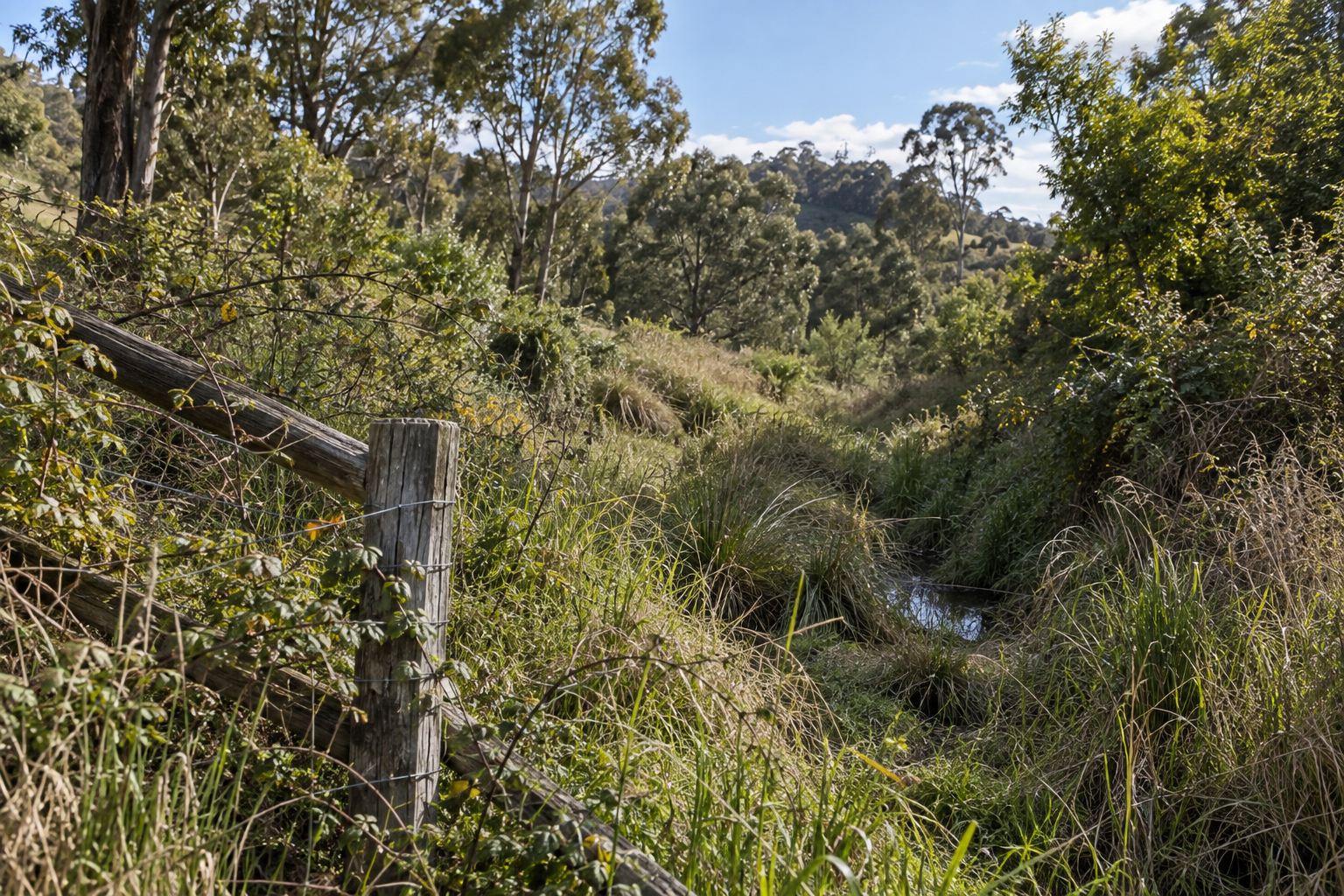
A drainage line that cannot be seen cannot be inspected.
On this page
The decisions this service helps with
Fences, walls and structures
What needs to be considered before clearing close to a boundary or building, on private land or a commercial site.
Drainage lines and low-lying ground
How to plan vegetation work near drainage without making engineering claims, and who needs to be involved before work begins.
Planning before the fire-danger period
What a commercial site or a rural property should organise before summer. Practical planning, not a fire-compliance service.
Practical articles on each of these are published in the Journal as they are written.
Common questions
Fences, structures and drainage questions
Will a machine damage the fence?
The work boundary is agreed before we start, and close to a fence or structure the last stretch is usually hand work. If a fence is already damaged by growth, we will show you before anything is cut.
Can you clear a drain?
We clear the vegetation that is restricting access to and visibility of a drainage area. We do not assess, repair or certify drainage. Where the site has environmental or access requirements around water, raise them at the site assessment.
Is this the same as fire compliance work?
No. Clearing dense growth before summer is sensible planning and we do it every year. We do not certify fire compliance or provide fire-safety advice; that comes from your local fire authority or council.